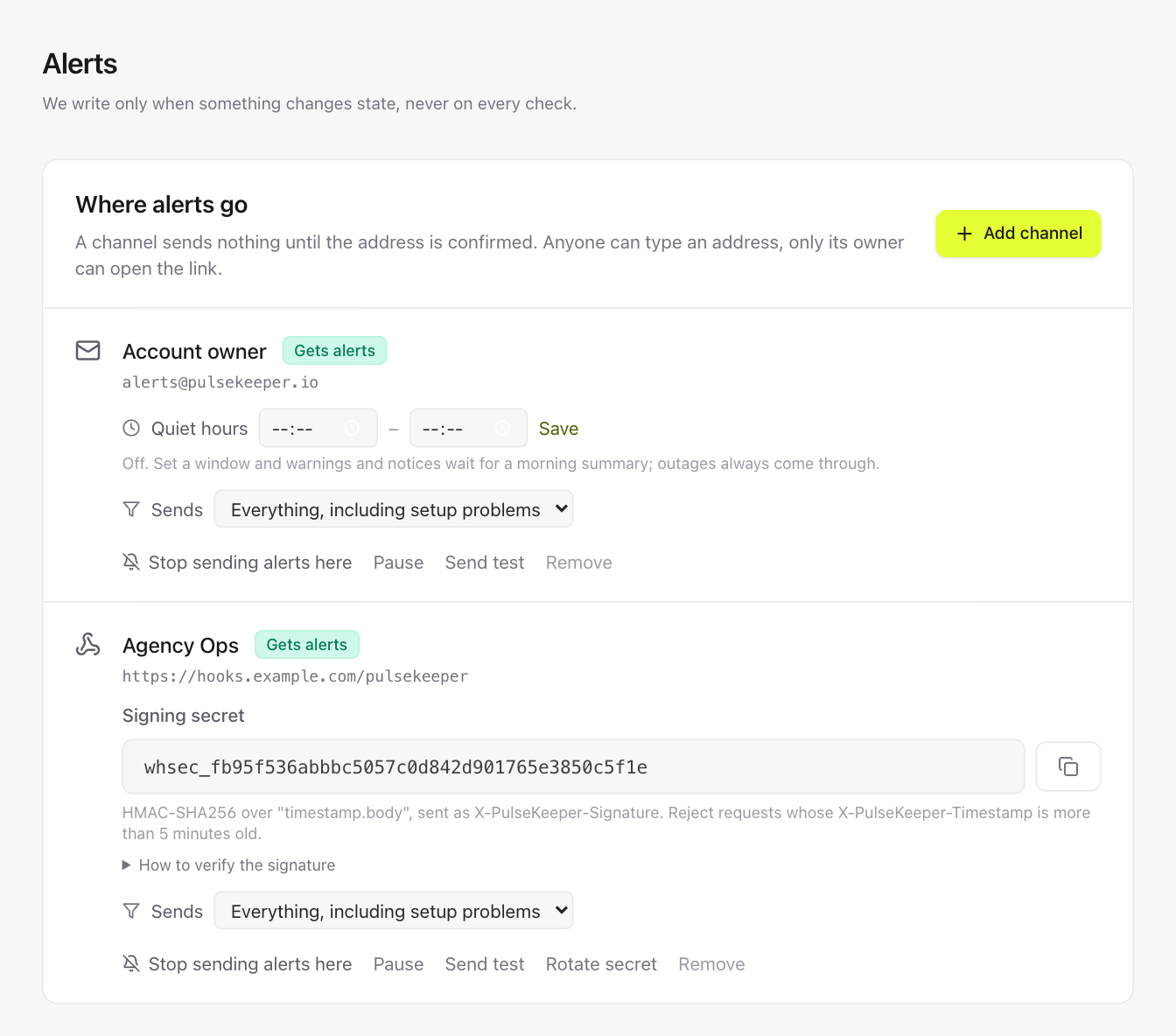
You hear about an incident when it is confirmed and again when it is resolved. Reminders back off from five minutes to a day, and acknowledging an incident stops them.
An address starts receiving alerts only after its owner opens the confirmation link, so the channel list is a list of people who actually read it.
Slack and Discord through their webhooks, Telegram through our bot, in a private chat or a group. Quiet hours and grouping apply to them as to email.
Confirmed outages are texted to a number you confirmed with a code. Warnings stay on your other channels, and the monthly SMS credits from your plan are shown on the page, not discovered when they run out.
Every request is signed with HMAC-SHA256 over the timestamp and body, with a delivery ID that stays the same on retries. Rotate the secret without losing an alert.
5 minutes, 30 minutes, 2 hours, 6 hours, 24 hours, then silence. Resolution goes to the same channels as the first alert, never to someone who never heard about it.
Slack gets a button to open the incident, not to acknowledge it. Acknowledging from Slack needs a Slack app, which is on the way. Phone calls are not available yet, and SMS goes out for outages only.
Uptime monitoring
HTTP, TCP ports and ping, from six regions
Performance monitoring
Response time per location and page load from PageSpeed
Deploy tracking
Every deploy measured before and after
SSL & domain expiry
Certificates and registrations, weeks ahead
DNS history
What changed in your DNS, and when
Status pages
One public page for all of a client's services
Maintenance windows
Planned work that does not page anyone
No card, no trial countdown. Add a monitor and it starts being measured before you finish reading this sentence.